
EV Mobile Charger Selection Trends Highlight Safety, Compatibility, and Global Sourcing Needs
Just another WordPress site
Press Release Disclaimer: This is a press release distributed through the XPR Media network. It has not been independently verified by our newsroom.
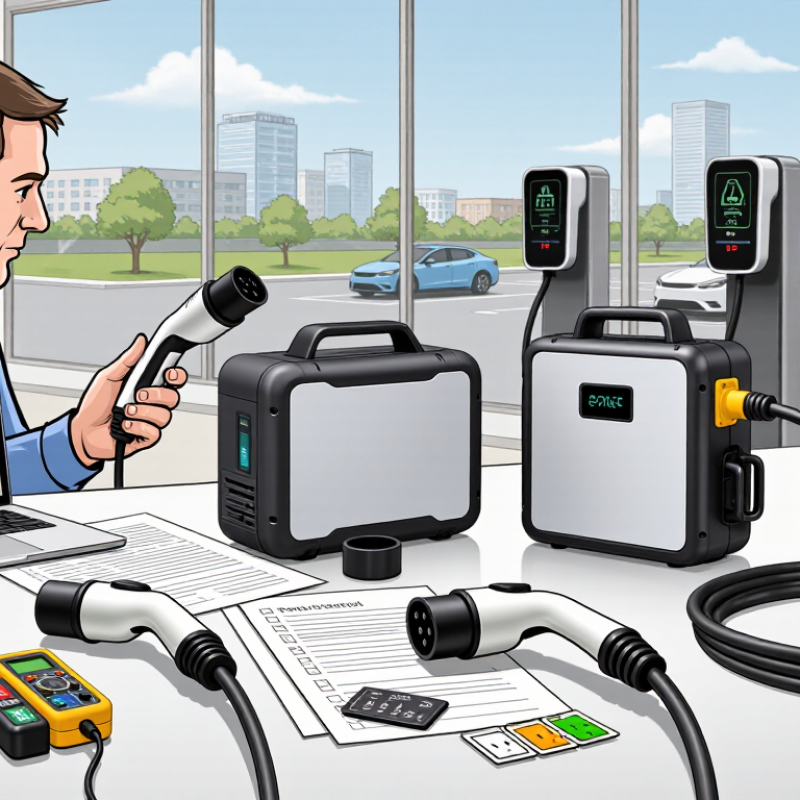

Chengdu City, Sichuan Province, China – October 21, 2026
Choosing an Ev Mobile Chargerfor global sourcing requires more than comparing charging speed and factory prices. It demands practical judgment, technical knowledge, and evidence from real-world use. Tom Moloughney, an Ev Charging specialist and founder of State of Charge, captures this principle clearly: “The right charger depends on your use case.”That advice sounds simple. It is not.A buyer should examine vehicle compatibility, connector types, voltage ranges, thermal protection, and cable durability. A charger designed for one market may fail in another because household outlets, grid conditions, and certification requirements differ. Check regional standards carefully. Ask suppliers for test reports, factory audit records, product samples, warranty terms, and replacement procedures.Small details matter. A 5-meter cable may reach a driveway socket comfortably, while a stiff 3-meter cable may frustrate daily users. An IP-rated enclosure can protect outdoor equipment from rain, but only when sealing and assembly quality are consistent. Mobile applications should also support clear fault alerts, charging records, and secure software updates.Price still matters. It should not lead the decision.Reliable sourcing often involves comparing manufacturers such as Schneider Electric, ABB, and Wallbox, alongside capable private-label suppliers. Yet brand recognition alone cannot prove product suitability. I would test several samples under different temperatures and socket conditions before placing a large order. That step costs time. Skipping it can cost far more.This guide explores how to evaluate an Ev Mobile Charger globally, from technical specifications and compliance documents to supplier credibility, logistics, and after-sales support. Some assumptions may need revision. That is part of responsible procurement.
Define the Charging Needs and Use Cases
Before sourcing an Electric Vehicle Mobile Charger, define where and how it will be used. A commuter may need overnight charging at home, while a field technician may need emergency charging beside a roadside vehicle. Record daily driving distance, parking duration, outlet access, and expected charging frequency. These details determine suitable power, cable length, portability, and weather resistance.Do not choose the highest output automatically. A higher current can increase charging speed, but the vehicle and electrical circuit must support it. Check input voltage, plug type, charging connector, operating temperature, and protection features. For global sourcing, confirm regional electrical requirements and independent safety testing. A charger used outdoors should tolerate dust, light rain, and repeated cable handling. I would also request sample testing before a large order. Product descriptions can look convincing. Real use may expose weak connectors or awkward controls.Tips: Test the charger with different vehicle models and outlet conditions. Measure setup time, cable reach, heat, and display visibility at night. Ask users to carry it in a real vehicle, not only in a warehouse. One detail is easy to miss: storage space. A thick cable may offer durability, yet become frustrating during daily use. I once underestimated this trade-off. It changed the preferred design.
Compare Connector Types, Power Ratings, and Charging SpeedsHow to Choose an EV Mobile Charger for Global Sourcing
Connector choice should match the vehicle market, not only the supplier’s catalog. Common AC connectors differ by region, vehicle design, and socket standard. Check the plug shape, pin layout, locking method, and cable length carefully. A connector that fits physically may still fail electrically. For wider distribution, consider interchangeable input plugs and clear compatibility records. Do not rely on one product photo.
Power ratings also affect daily usability. A 3.6 kW charger suits overnight charging at many homes. An 11 kW model can reduce charging time, but it needs suitable three-phase infrastructure. Higher power is not always better. Household wiring, portable sockets, and local electrical limits may restrict performance. For faster roadside charging, a Dc Charger can be appropriate, but it usually requires heavier equipment and stricter installation planning. Charging speed depends on the vehicle, battery temperature, and available supply. The number on the package tells only part of the story.
Tips: Ask for tested output data at different voltages. Confirm protection against overheating, leakage, and unstable supply. Check whether the display shows real-time current and power. Request samples from different production batches. A spreadsheet helps, yet it can miss practical problems, such as a stiff cable in cold weather. I have learned that small handling details often affect customer trust more than impressive specifications. Test before scaling orders.
Check Voltage, Frequency, and Regional Compatibility
Global EV demand is expanding quickly. The International Energy Agency’s Global EV Outlook 2024 reported nearly 14 million electric car sales in 2023, representing about 18% of global car sales. This growth makes regional electrical compatibility a sourcing priority. A mobile charger designed for one market may perform poorly elsewhere.Check voltage before checking appearance. Many European and Asian markets use around 220–240 volts at 50 hertz. The United States and Canada commonly use around 120 volts at 60 hertz. However, national standards include exceptions. A plug adapter changes the plug shape, not the voltage or frequency. For example, a 3.6-kilowatt charger draws about 15 amps at 240 volts, but approximately 30 amps at 120 volts. That difference can exceed a household circuit’s rating. The charger’s input range, maximum current, plug configuration, and protective functions should match the destination market.Frequency also matters for internal components, although modern electronic chargers often tolerate both 50 and 60 hertz. Confirm this in technical documentation and laboratory test records. IEC 61851 requirements provide a useful reference for conductive charging equipment, while local certification remains essential. The U.S. Department of Energy’s Alternative Fuels Data Center highlights the importance of connector and charging-equipment compatibility across locations. A practical sourcing process should test samples under local voltage, temperature, and socket conditions. Spreadsheets help, but they can miss a loose connection or an overheated cable. That weakness deserves attention.
How to Choose an EV Mobile Charger for Global Sourcing – Check Voltage, Frequency, and Regional Compatibility
| Region or Market | Typical Household Voltage | Frequency | Common Socket Types | Typical Single-Phase Charging Input | Regional Compatibility Requirements | Recommended Sourcing Check |
|---|---|---|---|---|---|---|
| United States | 120 V; some premises also provide 208–240 V circuits | 60 Hz | Type A/B; NEMA 5-15 and 5-20 are common for 120 V | 120 V portable charging is common; 208–240 V units require a suitable circuit and plug | Use a charger rated for 60 Hz operation. Verify plug configuration, circuit amperage, grounding, and integrated ground-fault protection. | Confirm voltage range, NEMA plug option, maximum continuous current, and applicable local electrical requirements. |
| Canada | 120 V; 208–240 V circuits are also widely used | 60 Hz | Type A/B; NEMA 5-15 and 5-20 for 120 V | 120 V for standard outlets; 208–240 V for higher-power dedicated circuits | Charger must support 60 Hz and the selected Canadian plug and circuit. Outdoor use may require weather-resistant equipment and ground-fault protection. | Check CSA-related market requirements, plug type, enclosure rating, and continuous-load current setting. |
| Mexico | 127 V nominal; 220–240 V may be available for dedicated circuits | 60 Hz | Type A/B; NEMA-style receptacles are common | 127 V portable charging is common; higher-voltage charging depends on the installation | Do not assume a 120 V charger is automatically suitable for every 127 V installation. Confirm the actual input range and grounding quality. | Select a wide input range that explicitly covers the local nominal voltage and verify plug and protection requirements. |
| European Union and many continental European markets | 230 V nominal, commonly within approximately 220–240 V supply ranges | 50 Hz | Type C, E, and F; Schuko-style Type F is common in many markets | 230 V single-phase charging is standard; current commonly depends on the socket and circuit rating | Use a charger rated for 230 V and 50 Hz. Plug earthing and residual-current protection must match the destination market. | Confirm the exact plug variant, CE and applicable local conformity requirements, RCD/DC leakage protection, and adjustable current control. |
| United Kingdom and Ireland | 230 V nominal | 50 Hz | Type G; BS 1363 sockets are common | 230 V single-phase charging, subject to the socket and circuit rating | Type G plugs normally include a fuse. The charger must be compatible with the local plug, earthing arrangement, and residual-current protection requirements. | Verify fused plug configuration, current rating, cable temperature performance, and UK/Ireland market conformity documentation. |
| Australia and New Zealand | 230 V in New Zealand; 230–240 V supply is commonly encountered in Australia | 50 Hz | Type I | 230–240 V single-phase charging is common | Use a Type I configuration and confirm compatibility with local socket, earthing, outdoor-use, and residual-current protection rules. | Check the charger input range, Type I plug version, local approval pathway, IP rating, and adjustable current settings. |
| Japan | 100 V | 50 Hz in eastern areas; 60 Hz in western areas | Type A/B | 100 V charging is possible but generally provides lower charging power than 230 V systems | The charger must support 100 V and the frequency used in the destination area. Frequency compatibility is especially important for equipment with frequency-sensitive components. | Do not source a 230 V-only charger. Confirm 100 V operation, 50/60 Hz compatibility, plug type, and allowable continuous current. |
| South Korea | 220 V | 60 Hz | Type C/F | 220 V single-phase charging is common | Use a charger rated for 220 V and 60 Hz with a compatible grounded plug. Confirm the receptacle condition and protective-device requirements. | Verify input tolerance, Type C or F plug selection, grounding detection, and residual-current protection. |
| Mainland China | 220 V nominal | 50 Hz | Type A and I are commonly encountered | 220 V single-phase charging is common; outlet and circuit ratings vary | The charger should support 220 V and 50 Hz. Plug geometry, grounding, socket quality, and local certification requirements must be checked. | Confirm the exact Type A or I plug, Chinese market conformity needs, cable rating, and protection against leakage current. |
| India | 230 V nominal | 50 Hz | Type D and M; Type C may also be found | 230 V single-phase charging is common | Socket quality and earthing can vary considerably. The charger should have suitable overcurrent, overtemperature, and residual-current protection. | Confirm plug type, earthing detection, socket current rating, cable temperature limits, and local compliance requirements. |
| South Africa | 230 V nominal | 50 Hz | Type D, M, and newer Type N installations | 230 V single-phase charging is common | Check the exact socket and plug standard because legacy and newer installations may coexist. Outdoor installations require appropriate environmental protection. | Specify the destination plug, IP rating, residual-current protection, earth continuity monitoring, and local approval requirements. |
| Brazil | 127 V or 220 V, depending on the location and installation | 60 Hz | Type N; Type A and older socket arrangements may also be encountered | Charging input depends on whether the installation supplies 127 V or 220 V | A single national voltage assumption is unsafe. The charger must be matched to the measured supply and the correct Type N plug configuration. | Confirm the city or site voltage before shipment, then verify input range, plug type, grounding, and local certification requirements. |
| United Arab Emirates and several Gulf markets | 230 V nominal | 50 Hz | Type G | 230 V single-phase charging is common | Use a Type G plug and a charger rated for 230 V and 50 Hz. High ambient temperatures make thermal protection and cable quality important. | Check plug fusing, high-temperature operating limits, IP rating, current adjustment, and destination-market conformity. |
| Switzerland | 230 V nominal | 50 Hz | Type J | 230 V single-phase charging is common | Type J compatibility is essential; Type C may fit some sockets but should not be treated as a universal replacement for a grounded connection. | Specify a compatible grounded plug and verify residual-current protection, input range, and Swiss market requirements. |
Important sourcing note: Household voltage and socket practices can vary by building, circuit, and locality. Before production or shipment, verify the destination voltage, frequency, socket type, earthing arrangement, maximum continuous current, residual-current protection, environmental conditions, and applicable certification requirements. A plug adapter changes the physical connection only; it does not convert voltage or frequency.Evaluate Safety Features, Certifications, and Build Quality
When sourcing an EV mobile charger globally, safety should guide every purchasing decision. Inspect the plug, cable, control box, and vehicle connector separately. A thick cable alone does not prove quality. Look for overcurrent, overvoltage, overheating, and residual-current protection. These functions should operate automatically, not depend on user judgment.
Ask suppliers for current test reports, traceable certificates, and the exact model numbers covered. Depending on the destination market, relevant requirements may include IEC 61851, IEC 62196, CE, UKCA, or UL-related evaluations. Certification marks should match the product and manufacturing site. A copied document is not evidence. Verify it with the issuing laboratory when possible. Also check the enclosure rating, especially if the charger may face rain, dust, or muddy storage areas.
Build quality appears in small details. The cable should bend smoothly without exposing stiff spots. Plugs need firm pins, clean molding, and strain relief that does not crack under repeated movement. Open the control box sample, if permitted, and inspect terminal spacing, thermal protection, and component labeling. During one practical inspection, a charger passed a short charging test but showed heat near the plug after repeated cycles. That finding changed the supplier evaluation. Short tests can mislead. Request endurance testing, temperature records, and sample units before placing a large order. I would not rely on attractive packaging or a low price. They are weak evidence.
Assess Portability, Smart Functions, and Ease of Use
When sourcing an Ev Charger for international markets, portability should be tested, not assumed. I look for a balanced handle, a flexible cable, and a storage case that fits under a car seat. A compact unit is useful, but very light construction can feel fragile. Check cable length in a real parking space. A three-meter cable may fail beside a distant wall socket. Weight matters during daily lifting. So does strain relief.
Smart functions should solve practical problems. A clear display can show charging current, temperature, and fault status at a glance. Adjustable current settings help users match different household circuits, but controls must resist accidental changes. Wi-Fi or Bluetooth may support scheduling and usage records. Yet weak connectivity can frustrate drivers in garages. Offline operation is essential. I would request test logs, software update procedures, and data-handling details from suppliers. These documents reveal more than polished product photos.
Ease of use begins with the first minute. The plug should seat firmly, indicators should be readable in bright sunlight, and instructions should use plain international English. Color coding helps, although colors are not enough for every user. Include clear steps for inspection, cleaning, and fault recovery. Ask for samples before a large order. One sample may hide production variation. Compare several units after repeated bending and carrying. A useful Ev Charger feels simple, remains predictable, and makes its limits obvious.
Verify Supplier Capability, Pricing, Warranty, and After-Sales Support
How to Choose an EV Mobile Charger for Global SourcingA reliable supplier should prove capability, not merely promise production volume. Request factory photos, process records, and recent test reports for the exact charger model. For a Nio Charger, confirm input range, connector options, cable temperature control, and protection against overheating. Ask whether the supplier performs final inspection on every unit or only samples from each batch.Pricing needs a clear structure. Compare the charger, cable, packaging, testing, spare parts, and shipping separately. A low quotation may exclude essential safety checks or after-sales costs. I once focused too heavily on unit price. That mistake was expensive. A slightly higher offer became more reasonable after calculating replacements and delayed deliveries.Tips: Request one production sample before placing a large order. Test it with different vehicle models and power sources. Read the warranty carefully. Check its length, covered components, repair process, and response time. Ask who pays for defective-unit shipping. Suppliers should provide troubleshooting guides, replacement parts, and technical support across time zones. Record every promise in the purchasing agreement. Some suppliers sound experienced but respond slowly after payment. That is a warning sign. Also, review customer references from markets with similar voltage and climate conditions. A charger used near humid ports may need different protection from one used in dry inland regions. Perfect sourcing rarely exists, so document weak points before approval.
How to Choose an EV Mobile Charger for Global Sourcing
Procurement reference benchmarks for verifying supplier capability, pricing, warranty, and after-sales support.
Use these benchmarks as an initial RFQ checklist: confirm production capacity of at least 1,000 units per month, compare pricing against a standardized specification, request a warranty of 24 months or longer, and require an after-sales response within 24 hours.
10kW Portable EV Charger: Market Insights from the IEA’s Global EV Outlook 2024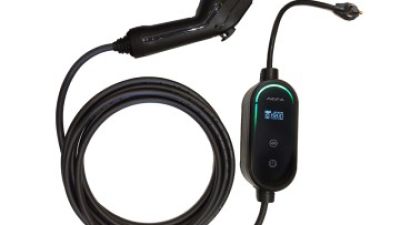
10kW Portable EV Charger
The IEA’s *Global EV Outlook 2024* highlights the continued expansion of electric mobility and the growing need for convenient, reliable charging. As EV ownership spreads beyond early-adopter markets, drivers are seeking flexible solutions that fit different daily routines. A 10kW portable EV charger can support this shift by offering a practical charging option when fixed public infrastructure is busy, unavailable, or located far from home.Designed for more than road trips, a portable charger can power an EV at home, in an office parking area, or near shopping destinations, provided that the electrical supply and vehicle are compatible. Its portable format allows drivers to adapt charging to changing schedules, while a higher charging capacity can help reduce waiting time compared with basic household charging. This flexibility is especially useful in regions where charging networks are developing at different speeds, a market condition noted in the IEA’s global analysis.As EV adoption grows, portable equipment may complement public Charging Stations rather than replace them. Drivers can keep a charger in the vehicle for planned journeys, workplace use, or unexpected changes in location. Safety protections, clear operating instructions, weather-appropriate use, and professional installation of supporting electrical equipment remain important factors when selecting a 10kW solution.
Conclusion
Choosing the right Ev Mobile Charger begins with a clear understanding of your vehicle, daily driving habits, charging environment, and expected travel scenarios. Buyers should compare connector types, power ratings, charging speeds, cable length, and compatibility with different vehicles. It is also essential to confirm voltage, frequency, plug standards, and regional electrical requirements before purchasing, especially for international sourcing. A suitable charger should include reliable protection against overcurrent, overvoltage, overheating, leakage, and grounding issues, along with appropriate certifications and durable construction.Portability and ease of use are equally important for drivers who charge at home, work, or on the road. Features such as adjustable current settings, clear status indicators, app connectivity, scheduling, and compact storage can improve convenience. Finally, evaluate the supplier’s production capability, quality-control process, pricing transparency, warranty terms, customization options, delivery reliability, and after-sales support. A careful comparison helps buyers select a safe, practical, and dependable charging solution for both personal and commercial use.
About US
Chengdu AEFA Electronic Technology Co., Ltd. was established in 2015 and is headquartered in Chengdu, Sichuan Province, the science and technology innovation center of southwest China and the hometown of pandas. As a high-tech enterprise specializing in the research, development, production and sales of electric vehicle charging equipment, we have a modern industrial park covering an area of 22 acres and equipped with 15,000 square meters of standard factory buildings, committed to providing high-quality charging solutions for global customers.
Media Contact
Company Name: Chengdu AEFA Electronic Technology Co., Ltd.
Contact Person: Media Relations
Email: Send Email
Country: China
Website: https://www.aefa-evse.com/
Press Release Distributed by ABNewswire.com
To view the original version on ABNewswire visit: EV Mobile Charger Selection Trends Highlight Safety, Compatibility, and Global Sourcing Needs

