Qualtech’s Advanced R&D and Manufacturing as a Professional Power Storage System Factory with ISO 9001
HANGZHOU, ZHEJIANG, CHINA, August 18, 2026 /EINPresswire.com/ -- How do project owners ensure the long-term reliability
Press Release Disclaimer: This is a press release distributed through the XPR Media network. It has not been independently verified by our newsroom.
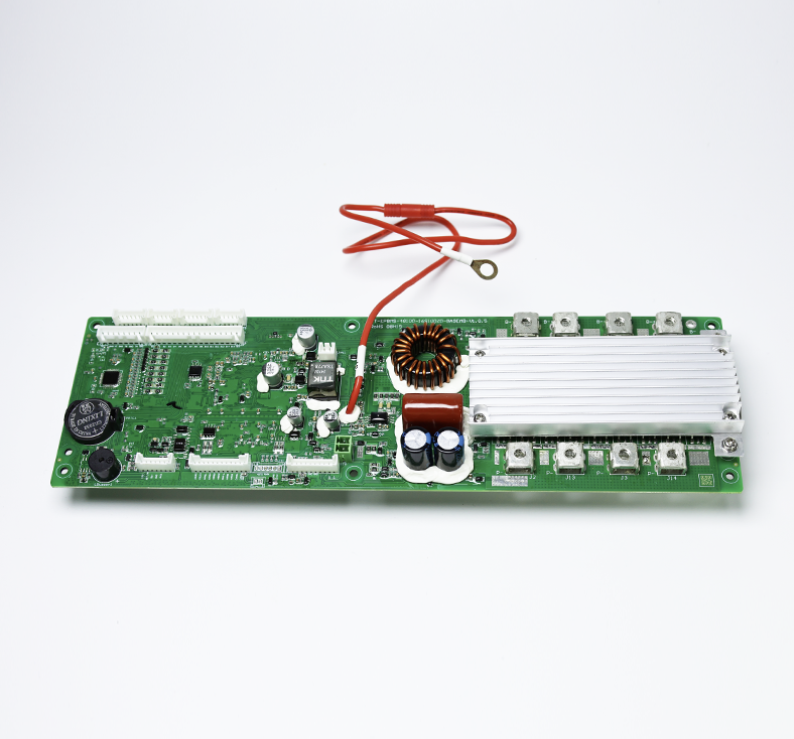

HANGZHOU, ZHEJIANG, CHINA, August 18, 2026 /EINPresswire.com/ — How do project owners ensure the long-term reliability of grid-scale energy assets when subtle discrepancies in cell balancing can degrade total capacity within a few thousand cycles? In the commercial and industrial infrastructure market, selecting a hardware supplier involves more than comparing datasheet metrics. True system resilience depends on the foundational engineering of the electronics, the tier structure of control software, and the precision of the manufacturing facility.
As a Professional Power Storage System Factory, Zhejiang Qualtech Co., Ltd. addresses these operational challenges through a comprehensive structure of full-stack, in-house research alongside deeply standardized production methods. Established in 2011, the company has evolved from a specialist developer of Lithium-ion Battery Management Systems (BMS) into a major supplier across China within the new energy vehicle and energy storage sectors, achieving recognition from the Ministry of Industry and Information Technology as a specialized, refined, new “little giant” enterprise.
A Foundation Built on Intensive R&D and Strategic Alliances
The underlying stability of these advanced power storage system platforms is driven by a deep commitment to internal technical development. Rather than relying on external design houses, Zhejiang Qualtech Co., Ltd. maintains an organizational structure where more than 50% of the total workforce comprises of dedicated research and engineering personnel. This intensive focus on engineering has generated an intellectual property portfolio exceeding 130 patents and independent IP rights. To ensure its hardware remains aligned with evolving grid requirements, the company reinforces its internal technical base through collaborative research initiatives conducted with joint energy technology laboratories established alongside leading technical universities. Furthermore, Qualtech has solidified its position within the industrial ecosystem by establishing strategic cooperation agreements with major state-owned energy enterprises and listed energy corporations, ensuring that its product design methodologies directly address practical operational realities.
R&D Depth: The Full-Stack 4S+C Technical Architecture
The transition from supplying standalone electronic sub-assemblies to delivering fully integrated, megawatt-scale hardware architectures requires an expansion of engineering capabilities. Many integrators function primarily as assembly shops, relying on third-party components for critical control layers. In contrast, Qualtech covers the entire hardware and software stack, building a unified framework designated as the 4S+C core control system. This technical topology seamlessly unifies the core operating segments: the lithium-ion battery management systems (BMS), the energy management system (ems), the power conversion system (pcs), the thermal management system (tms), and centralized cloud monitoring. By developing each layer within a single engineering ecosystem, the company eliminates the signaling latencies and protocol incompatibilities that frequently complicate multi-vendor configurations.
At the hardware level, this deep research and development is visible in the physical architecture designed for high-voltage installations. Modern infrastructure projects increasingly deploy 1500V topologies to maximize energy density and lower balance-of-system installation costs. Managing these volatile high-voltage fields demands a precise hierarchy of hardware controllers. The company addresses this through a robust three-tier management architecture. This configuration incorporates field-level slave units, such as the passive balancing SBMU series modules, which communicate directly with individual cell clusters. These field modules route critical data up to specialized cluster controllers and integrated PBMS all-in-one control systems, while entire multi-cluster networks are managed via central master units like the QT-SEMU-5819B 10.1-inch touch display and control unit. Running across this multi-tier architecture are advanced, proprietary algorithms optimized for state-of-charge (SoC) and state-of-health (SoH) estimation. These computational models process dynamic cell inputs in real time, preventing localized thermal stress, mitigating capacity divergence, and extending the operational lifecycle of the core battery assets.
Manufacturing and Quality Control Under the ISO 9001 Framework
Engineering design, however, remains effective only if paired with rigorous physical manufacturing. The production environment at Zhejiang Qualtech Co., Ltd. operates under stringently monitored industrial controls across dedicated regional facilities. Surface-mount technology (SMT) operations are centralized within advanced clean-room environments featuring high-speed Panasonic mounting lines imported from Japan, supported by inline solder paste inspection (SPI), 3D automated optical inspection (AOI), and specialized X-ray analysis to prevent cold solder joints or component misalignments. The final integration and heavy equipment assembly occur at specialized industrial complexes, such as the Huzhou Deqing manufacturing base. This facility features dedicated, automated assembly bays optimized for high-voltage boxes, system combiner cabinets, and containerized utility configurations. Every component moving through the line is tracked by an integrated manufacturing execution system (MES), providing full digital traceability for every electronic component, wiring harness, and structural enclosure from initial receipt to final dispatch.
This disciplined approach to manufacturing infrastructure is validated by comprehensive international quality standards. The factory operations are strictly certified under the ISO 9001 quality management standard, establishing consistent procedural controls across every step of design, procurement, and structural assembly. This baseline is paired with ISO 14001 environmental management and ISO 45001 occupational health and safety certifications. To satisfy the safety demands of both heavy automotive transport and industrial power grids, the facility continuously aligns its workflows with rigorous automotive standards, maintaining compliance with IATF 16949 and actively advancing toward complete ISO 26262 functional safety certification. These external verifications are backed by substantial internal physical validation infrastructure, including dedicated in-house electromagnetic compatibility (EMC) testing rooms, hardware-in-the-loop (HiL) simulation labs, and specialized battery performance testing environments designed to stress-test hardware against severe environmental extremes before field deployment.
Proven Field Solutions and Large-Scale System Delivery
The physical output of this manufacturing framework directly supports a diverse portfolio of modular hardware solutions. For decentralized commercial and industrial installations, the product catalog features compact, liquid-cooled all-in-one outdoor energy cabinets that maximize energy density within tight spatial constraints while maintaining precise thermal management. For utility-scale projects and grid-tied substations, the offering shifts to high-capacity containerized energy storage systems — engineered around 314Ah lithium iron phosphate cells with full-immersion dielectric liquid cooling. By submerging cells in non-flammable dielectric fluid, the design isolates the electrochemistry from moisture and particulates while effectively preventing thermal runaway propagation.
This scalable manufacturing footprint is validated by over 50 GWh in cumulative shipments across storage systems and power electronics, supported by twin production bases. Real-world deployments further demonstrate the architecture’s adaptability under varying grid and environmental conditions. In Dali, Yunnan, Qualtech delivered integrated BMS and system solutions for a 600 MWh liquid-cooled energy storage project — a deployment in a high-altitude, humidity-heavy region that tested the thermal management system’s ability to maintain stable operating temperatures and the BMS control logic under sustained moisture exposure. The operational data gathered from this site has since informed refinements to the company’s liquid-cooling loop design and insulation protocols for similar climatic deployments.
Rather than positioning itself as a general contractor or basic component supplier, Qualtech operates as a structurally integrated technical partner. By retaining direct control over lithium-ion battery management systems, maintaining a self-developed 4S+C technical architecture, and enforcing strict ISO 9001 manufacturing disciplines across its assembly bases, the company provides asset developers with fully verifiable performance credentials.
For engineering teams evaluating grid-scale infrastructure deployments or seeking technical data regarding advanced BMS architectures and customized system enclosures, contact Qualtech’s engineering team to request a product brochure or schedule a technical consultation. Visit https://www.qualtechenergy.com/ for more information.
ZheJiang Qualtech Co.,Ltd.
ZheJiang Qualtech Co.,Ltd.
+ +86 15013692485
email us here
Visit us on social media:
LinkedIn
Facebook
TikTok
X
Legal Disclaimer:
EIN Presswire provides this news content “as is” without warranty of any kind. We do not accept any responsibility or liability
for the accuracy, content, images, videos, licenses, completeness, legality, or reliability of the information contained in this
article. If you have any complaints or copyright issues related to this article, kindly contact the author above.

Media gallery