Palletizing and Depalletizing Launch: One Robotic Cell
New robotic system stacks outbound pallets and unloads incoming pallets from one cell, cutting labor costs, floor
Press Release Disclaimer: This is a press release distributed through the XPR Media network. It has not been independently verified by our newsroom.
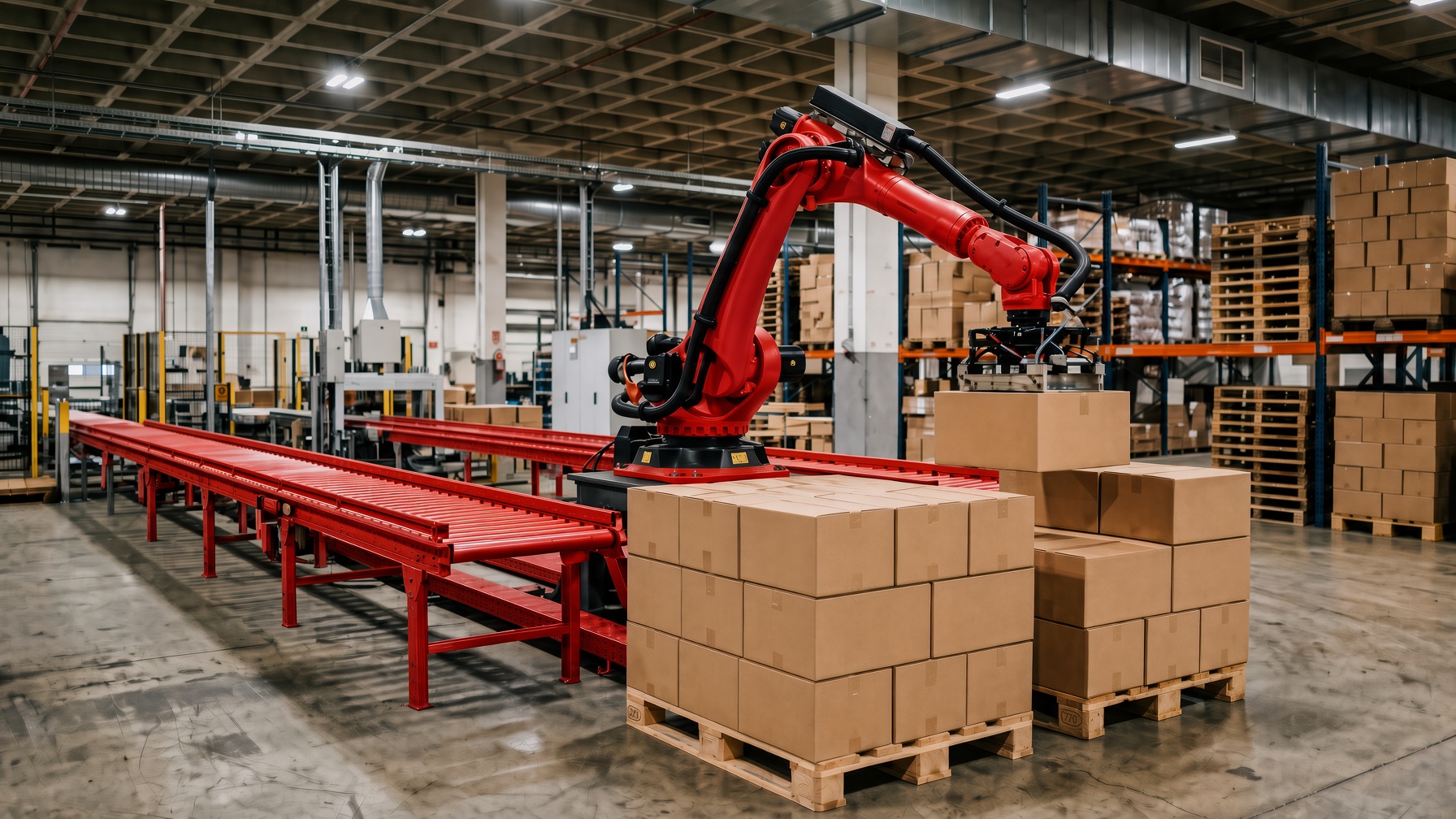

New robotic system stacks outbound pallets and unloads incoming pallets from one cell, cutting labor costs, floor space, and payback time for distribution ops.
WIXOM, MI, UNITED STATES, October 12, 2026 /EINPresswire.com/ — WIXOM, MI, October 7, 2026 — ISD – Integrated Systems Design today announced its palletizing and depalletizing launch: the Palletizing Module. The robotic system builds outbound pallets and breaks down incoming ones from a single cell. Most competing systems handle only one direction, requiring separate equipment, separate floor space, and separate capital budgets for each function.
The system combines a robotic arm, custom end-of-arm tooling, machine vision, and integrated controls into one automated cell. The vision system identifies box or case dimensions in real time and adjusts placement patterns accordingly, whether the robot is building a pallet or breaking one down. Operators switch the system between palletizing and depalletizing modes without reconfiguring hardware.
Measurable Impact
43% labor reduction compared with manual palletizing and depalletizing operations
Up to 70% typical payback on equipment cost versus running two dedicated single-function systems
9-to-18-month ROI, depending on shift structure and throughput volume
That flexibility addresses a real operational pattern in distribution facilities: incoming freight often arrives on one shift and outbound orders ship on another. A facility receiving raw materials or components in the morning and shipping finished goods in the afternoon can now run both processes through the same cell instead of maintaining two dedicated systems, which helps drive the labor and capital savings above.
“Running palletizing and depalletizing through one cell means a customer isn’t paying twice for equipment that sits idle half the day,” said Tony Morgott, president and CEO at ISD. “It changes the capital math and the footprint math at the same time, and the payback numbers reflect that.”
Palletizing and Depalletizing Launch System Specifications
Cycle rate: 10 to 25+ cases per minute, depending on robot and pattern
Payload capacity: Up to several hundred pounds per pick, robot dependent
Reach: 6 to 10+ feet, depending on robot class
Pallet height: Up to 8 feet, application dependent
Investment: Single-line systems, including collaborative robot (cobot) cells, range from approximately $60,000 to $250,000 for simpler configurations; higher-speed or extensively integrated systems can exceed $500,000, depending on throughput, payload, tooling, safety requirements, and installation and integration scope
ISD designed the Palletizing Module to work with multiple robot platforms rather than a single proprietary arm. The company evaluates collaborative, industrial, SCARA, and gantry robots for each installation based on payload, cycle time, and floor space requirements, then integrates the platform that fits the application.
On the operations side, the dual-mode design also simplifies maintenance and training. A single cell means one set of safety protocols, one maintenance schedule, and one crew trained on one system, rather than two.
“From an engineering standpoint, running one cell instead of two isn’t just a cost story, it’s a reliability story,” said Robert Jones, senior consultant at ISD. “Fewer systems means fewer failure points and a simpler maintenance plan for the customer’s team.”
That approach reflects ISD’s role as a systems integrator rather than a single-product manufacturer. The company builds and configures automation systems around a customer’s existing facility, product mix, and labor constraints, rather than requiring the customer to adapt to one vendor’s fixed platform.
Full technical detail on the Palletizing Module, including configuration options and additional specifications, is available on ISD’s palletizing and depalletizing systems page. Warehouse and distribution operators interested in the Palletizing Module can schedule a consultation with ISD’s engineering team to evaluate fit for their facility. ISD also offers a self-assessment checklist for operations teams to gauge readiness for palletizing automation before engaging in a formal evaluation.
About ISD – Integrated Systems Design
ISD – Integrated Systems Design is a warehouse automation systems integrator and OEM manufacturer based in Wixom, Michigan, with more than several decades of experience serving distribution and manufacturing operations. ISD designs, builds, and integrates automated material handling systems, including the UltraStore Mid-Load automated storage and retrieval system (ASRS) and the OptimalOps-Process™ software platform. ISD serves customers across food and beverage, consumer goods, industrial manufacturing, and third-party logistics.
Ed Romaine
Integrated Systems Design
+1 215-512-2613
email us here
Visit us on social media:
LinkedIn
Facebook
YouTube
Other
OptimalOps-Process 8-Step Methodology Video – ISD
Legal Disclaimer:
EIN Presswire provides this news content “as is” without warranty of any kind. We do not accept any responsibility or liability
for the accuracy, content, images, videos, licenses, completeness, legality, or reliability of the information contained in this
article. If you have any complaints or copyright issues related to this article, kindly contact the author above.

Media gallery